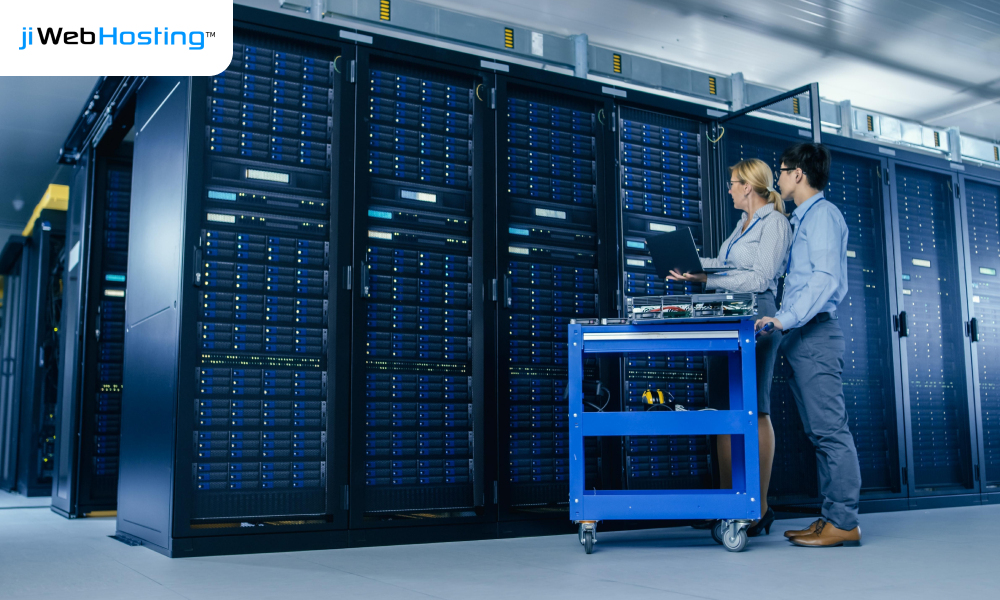
Dedicated servers are powerful hosting solutions designed to provide businesses with complete control, reliability, and performance. Unlike shared hosting environments where multiple websites compete for the same resources, a dedicated server is exclusively allocated to a single organization. This means the entire server infrastructure including CPU, RAM, storage, and bandwidth is reserved for one user. As businesses grow and require higher speed, stronger security, and better scalability, dedicated servers become a preferred choice for hosting high-traffic websites, enterprise applications, eCommerce platforms, and data-intensive systems.
In today’s digital-first world, your website and applications are not just online assets - they are the backbone of your business. According to industry reports, over 70% of consumers judge a company’s credibility based on its website performance, while nearly 53% of users abandon a site if it takes more than three seconds to load. In addition, cybersecurity threats are increasing every year, with thousands of attacks targeting websites and applications daily.
So, ask yourself:
- Is your current hosting environment powerful enough to handle growing traffic?
- Are you confident about your website’s speed, uptime, and security?
- Can your hosting infrastructure scale as your business expands?
- Are you risking performance issues by sharing server resources with other websites?
If these questions make you pause, it may be time to consider dedicated server hosting. Whether you run a high-traffic website, an eCommerce platform, SaaS software, or enterprise applications, investing in dedicated servers can transform your digital performance and security. Let’s explore what dedicated servers are and the top benefits they offer for modern businesses.
Key Highlights
- Dedicated servers provide full access to CPU, RAM, storage, and bandwidth, ensuring fast loading speeds and consistent website performance.
- Complete server isolation, custom security configurations, and enhanced protection measures help safeguard sensitive business and customer data.
- Gain root access to configure operating systems, install custom software, and optimize server settings based on your business requirements.
- Easily upgrade server resources as your traffic grows while maintaining high uptime and uninterrupted operations.
- Dedicated hosting supports resource-intensive websites, eCommerce platforms, and enterprise applications without performance compromise.
What is a Dedicated Server?
A dediated server is a physical server exclusively allocated to a single user or organization. Unlike shared hosting, where multiple websites use the same server resources, a dedicated server provides complete control over hardware, software, bandwidth, and security configurations.
In simple terms, when you choose a dedicated server for website or dedicated server for applications, you do not share CPU, RAM, storage, or bandwidth with anyone else. All server resources are reserved solely for your business operations.
Types of Dedicated Hosting Models
There are generally two types of dedicated hosting models:
1. Unmanaged Dedicated Servers
You manage the server configuration, security updates, monitoring, and maintenance yourself. This option is suitable for businesses with an in-house IT team.
2. Managed Dedicated Server Hosting
With managed dedicated server hosting, the hosting provider handles server maintenance, security patches, monitoring, backups, and technical support. This allows businesses to focus on growth rather than infrastructure management.
Dedicated hosting is widely used by enterprises, large eCommerce stores, financial institutions, SaaS providers, and companies running mission-critical applications.
Benefits of Hosting Your Website on a Dedicated Server
Choosing the right hosting infrastructure is one of the most important decisions for any business operating online. Your website is often the first interaction customers have with your brand, and its performance, security, and reliability directly influence trust and conversions. Hosting your website on a dedicated server gives you complete control over your environment while ensuring high performance and long-term scalability. Below is a detailed breakdown of the major benefits of hosting your website on a dedicated server.
1. Exceptional Performance and Speed
Performance is one of the strongest advantages of dedicated server hosting. Unlike shared hosting environments where multiple websites compete for the same resources, a dedicated server allocates all CPU power, RAM, storage, and bandwidth exclusively to your website.
This results in:
- Faster page loading times
- Reduced latency
- Smooth multimedia streaming
- Quick database queries
- Better handling of dynamic content
If your website includes large product catalogs, high-resolution images, or complex backend processing, a dedicated server ensures optimal performance at all times. Faster websites not only improve user experience but also increase engagement and reduce bounce rates.
2. Consistent Performance During Traffic Spikes
Traffic fluctuations are common, especially during promotions, seasonal sales, or marketing campaigns. Shared hosting often struggles under sudden traffic surges because resources are divided among multiple users.
With a dedicated server for website hosting, you can:
- Handle thousands of concurrent users
- Manage peak traffic without crashes
- Maintain consistent response times
- Deliver uninterrupted service during campaigns
This reliability is particularly important for eCommerce websites, online learning platforms, SaaS applications, and corporate portals.
3. Enhanced Security and Isolation
Security is a major concern in today’s digital environment. Shared hosting increases vulnerability because a security breach in one website can potentially impact others on the same server.
A dedicated server provides:
- Complete server isolation
- Custom firewall configuration
- Advanced intrusion detection systems
- Strong access control policies
- Protection against malware spread
You have full authority to implement specific security protocols tailored to your business requirements. This is especially important if your website handles sensitive customer data such as payment details, personal information, or confidential documents.
4. Full Administrative Control
Hosting your website on a dedicated server gives you root-level access and full control over server configurations. You can:
- Choose your preferred operating system
- Install custom software and frameworks
- Optimize server performance settings
- Configure databases according to your needs
- Manage security patches and updates
This level of control ensures your website operates exactly as required, without limitations imposed by shared hosting providers.
5. Higher Uptime and Reliability
Website downtime can damage reputation and cause revenue loss. Dedicated servers are designed for high reliability and stability. Benefits include:
- Enterprise-grade hardware
- Redundant network connections
- Backup power systems
- Proactive monitoring
Because your server resources are not shared, the risk of unexpected downtime due to another website’s heavy usage is eliminated. This ensures your website remains accessible around the clock.
6. Scalability for Growing Businesses
As your business grows, your website’s hosting requirements will evolve. A dedicated server allows easy upgrades to support increased traffic and data demands. You can scale by:
- Increasing RAM capacity
- Expanding storage space
- Adding processing power
- Enhancing bandwidth
This flexibility allows your website to grow without the need for constant migrations or performance compromises.
7. Improved SEO Performance
Search engines prioritize websites that are fast, secure, and consistently available. Hosting your website on a dedicated server improves these ranking factors. Key SEO benefits include:
- Faster page load speed
- Reduced downtime
- Lower bounce rate
- Stronger security through HTTPS configuration
These elements collectively contribute to improved search engine visibility and higher organic traffic.
8. Dedicated IP Address
When you host your website on a dedicated server, you receive a unique IP address. This offers several advantages:
- Better email reputation and deliverability
- Stronger website credibility
- Protection from IP blacklisting issues
- Secure transactions
In shared hosting, if one website engages in malicious activity, the shared IP can be blacklisted - affecting all users. Dedicated servers eliminate this risk.
9. Custom Resource Allocation
Dedicated servers allow you to allocate resources exactly where they are needed most. If your website requires heavy database processing or media streaming capabilities, you can optimize the server accordingly. This ensures:
- Balanced resource distribution
- Improved backend efficiency
- Optimized application performance
- Reduced system bottlenecks
Such customization is particularly valuable for businesses with unique operational requirements.
10. Better Data Management and Backup Options
Data protection is crucial for business continuity. With a dedicated server, you can implement customized backup strategies tailored to your needs. You can configure:
- Automated backups
- Incremental backup systems
- Secure offsite storage
- Disaster recovery solutions
This level of control minimizes the risk of data loss and ensures quick recovery in case of unexpected incidents.
Technical Features of Dedicated Server
A dedicated server is designed to deliver high performance, security, and customization for businesses that require powerful and reliable hosting infrastructure. Unlike shared hosting environments, dedicated servers offer advanced technical capabilities that support complex websites, enterprise platforms, and high-performance applications. Below are the key technical features of a dedicated server:
1. Enterprise-Grade Hardware
Dedicated servers are built using high-performance hardware components to ensure stability and efficiency.
- Multi-core processors (Intel Xeon or AMD EPYC)
- High-capacity DDR4/DDR5 RAM
- SSD or NVMe storage drives
- RAID configuration support
- High-speed network interface cards
These components enable fast data processing, smooth multitasking, and reliable performance for demanding workloads.
2. Full Root and Administrative Access
Dedicated servers provide complete root or administrative access, allowing businesses to fully control the server environment. With root access, you can:
- Install custom applications
- Modify server configurations
- Optimize performance settings
- Manage user permissions
- Configure security protocols
This level of control is ideal for businesses with specific technical requirements.
3. Choice of Operating System
A dedicated server allows you to select your preferred operating system based on your business needs. The common options include:
- Linux distributions (Ubuntu, CentOS, Debian)
- Windows Server editions
- This flexibility ensures compatibility with your applications and development environment.
4. High Bandwidth and Network Connectivity
Dedicated servers are equipped with high-speed network connectivity to ensure smooth data transfer and minimal latency. Technical network features include:
- 1 Gbps or higher network ports
- High bandwidth allocation
- Dedicated IP addresses
- Low latency routing
- Tier-III or Tier-IV data center connectivity
This ensures stable performance even during heavy traffic periods.
5. RAID Storage Configuration
RAID (Redundant Array of Independent Disks) enhances data reliability and performance. The common RAID configurations include:
- RAID 1 (mirroring for redundancy)
- RAID 5 (striping with parity)
- RAID 10 (combination of performance and redundancy)
- RAID minimizes the risk of data loss and improves read/write speeds.
6. Advanced Security Features
Security is a critical technical aspect of dedicated servers. The security features often include:
- Hardware firewall support
- DDoS protection
- Intrusion detection systems (IDS)
- Secure SSH access
- SSL certificate installation
- Custom security patch management
These features provide a secure hosting environment for sensitive data and critical applications.
7. Virtualization Support
Dedicated servers can support virtualization technologies, allowing businesses to create multiple virtual machines on a single physical server. Supported virtualization platforms may include:
- VMware
- Hyper-V
- KVM
- VirtualBox
This feature is useful for businesses running multiple projects or testing environments.
8. Scalability Options
Dedicated servers allow hardware upgrades as business needs grow. Scalability features include:
- RAM expansion
- Storage upgrades
- CPU enhancements
- Bandwidth upgrades
This ensures long-term flexibility without migrating to a new hosting platform.
9. Automated Backup Solutions
Technical backup features ensure business continuity. These may include:
- Daily or weekly automated backups
- Snapshot backups
- Remote backup storage
- Disaster recovery integration
This helps protect important business data from accidental loss or system failure.
10. Monitoring and Performance Optimization
Dedicated servers often include monitoring tools that track server health and performance. Monitoring capabilities include:
- CPU usage tracking
- Memory utilization monitoring
- Disk performance analysis
- Network traffic monitoring
- Real-time alerts
These tools help identify and resolve issues proactively.
The Future of Dedicated Servers
As digital transformation accelerates across industries, businesses are demanding more powerful, secure, and flexible hosting infrastructures. While cloud computing has gained popularity, dedicated servers continue to play a crucial role in enterprise IT strategies. In fact, the future of dedicated servers looks stronger than ever, driven by evolving technologies, increased data demands, and growing cybersecurity concerns. Let’s explore how dedicated servers are evolving and what businesses can expect in the coming years.
1. Integration with Cloud and Hybrid Infrastructure
The future is not about choosing between cloud and dedicated hosting, it’s about combining both. Many organizations are adopting hybrid infrastructure models, where dedicated servers handle critical workloads while cloud platforms support scalability and backups. This approach offers:
- Better workload distribution
- Increased flexibility
- Enhanced disaster recovery
- Cost optimization
Dedicated servers will increasingly integrate with cloud environments, creating seamless hybrid ecosystems that deliver both control and scalability.
2. Rise of High-Performance Computing (HPC)
As industries adopt AI, machine learning, big data analytics, and real-time processing, demand for high-performance computing is rising. Dedicated servers are evolving with:
- More powerful multi-core processors
- Advanced GPU integration
- Faster NVMe storage solutions
- High-speed networking capabilities
These advancements will make dedicated servers essential for businesses running data-intensive applications.
3. Greater Focus on Cybersecurity
Cyber threats are becoming more sophisticated every year. The future of dedicated servers will include stronger built-in security frameworks such as:
- AI-driven threat detection
- Advanced DDoS mitigation systems
- Zero-trust security architecture
- Hardware-level encryption
- Automated security patching
Businesses will continue choosing dedicated servers for their isolated environments and enhanced control over security configurations.
4. Green and Energy-Efficient Data Centers
Sustainability is becoming a major priority for businesses worldwide. Data centers powering dedicated servers are increasingly adopting:
- Energy-efficient hardware
- Renewable energy sources
- Advanced cooling technologies
- Carbon footprint reduction strategies
Future dedicated hosting solutions will focus on eco-friendly infrastructure while maintaining high performance standards.
5. Automation and AI-Driven Server Management
Server management is becoming smarter with automation tools and artificial intelligence. The future developments may include:
- Predictive maintenance systems
- Automated performance optimization
- Intelligent resource allocation
- Self-healing server environments
These technologies will reduce downtime and improve overall operational efficiency.
Conclusion
At jiWebHosting, we understand that your website and applications are the backbone of your digital presence. Choosing a dedicated server means choosing complete control, superior speed, enhanced protection, and the scalability needed to support long-term growth. Dedicated hosting is ideal for businesses that demand consistent uptime, seamless user experiences, and advanced security configurations. Whether you operate a high-traffic website, an eCommerce platform, or resource-intensive applications, a dedicated server provides the infrastructure required to perform without compromise.
At jiWebHosting, we deliver robust and reliable dedicated hosting solutions tailored to your specific business requirements. Our focus is on providing high-performance servers, strong security measures, proactive monitoring, and expert technical support to ensure your digital operations run smoothly at all times. When you invest in a dedicated server with jiWebHosting, you are not just upgrading your hosting, you are building a strong, secure, and scalable foundation for your business’s future success. Contact us for more information.
Frequently Asked Questions
1. What is dedicated server hosting?
Dedicated server hosting is a hosting solution where a complete physical server is allocated to a single business. All resources are exclusively used by that organization.
2. What are the main benefits of dedicated servers?
The key benefits of dedicated servers include:
- Superior performance
- Enhanced security
- Full customization
- High uptime
- Scalability
- Dedicated IP address
3. Who should use a dedicated server for business?
Businesses that manage high-traffic websites, sensitive data, enterprise applications, or require custom configurations should consider a dedicated server.
4. Is managed dedicated server hosting worth it?
Yes. Managed dedicated server hosting ensures expert monitoring, regular updates, enhanced security, and technical support, reducing operational burden on your team.
5. How does a dedicated server improve website performance?
A dedicated server for website provides exclusive access to server resources, eliminating competition and ensuring faster loading speeds and consistent uptime.