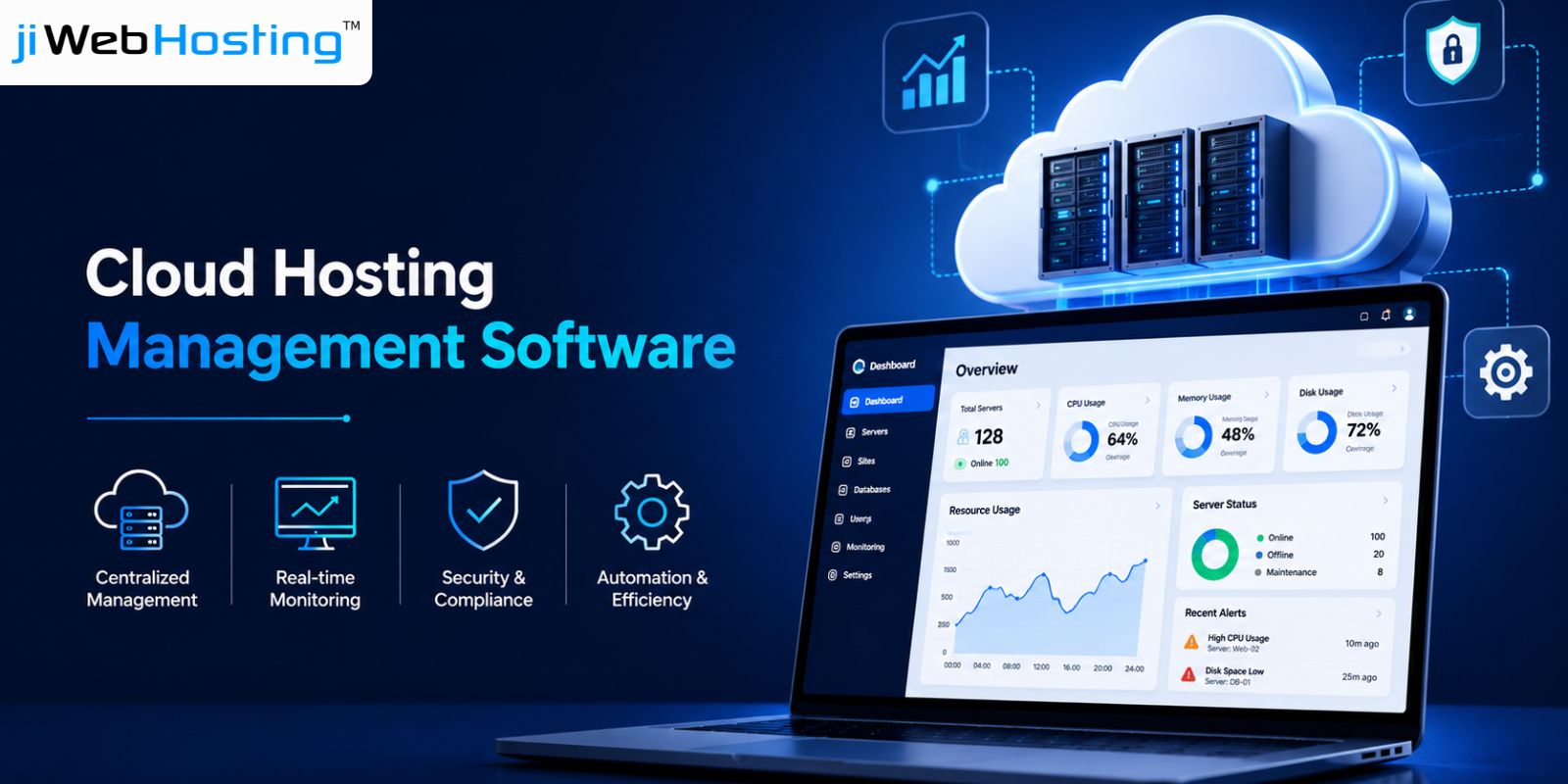
Modern businesses rely heavily on digital infrastructure to manage websites, applications, customer data, communication, and online operations. As organizations continue moving toward cloud-based environments, selecting the right Cloud Hosting Management Software has become a critical business decision. The software you choose directly impacts your website performance, data accessibility, security, scalability, operational efficiency, and overall customer experience.
In this detailed guide, we explain everything businesses should consider before selecting Cloud Hosting Management Software and how the right platform can improve performance, security, and long-term scalability.
Key Takeaways
- Choosing the right Cloud Hosting Management Software improves scalability, security, and overall business performance.
- Reliable Cloud Hosting Software helps businesses manage websites, applications, and cloud infrastructure more efficiently.
- Secure Cloud File Hosting and cloud file hosting services protect critical business data while enabling remote accessibility.
- The best cloud hosting plans provide flexibility, high uptime, faster website speed, and cost-effective web-hosting solutions.
- jiWebHosting offers scalable and secure cloud hosting solutions designed to support modern business growth and digital success.
Understanding Cloud Hosting Management Software
Cloud Hosting Management Software is a platform that helps businesses manage cloud servers, hosting resources, storage, applications, backups, security settings, domains, and website performance from a centralized dashboard.
Unlike traditional hosting systems that rely on a single physical server, cloud hosting distributes resources across multiple virtual servers. This creates a more flexible and reliable hosting environment capable of handling varying workloads and traffic demands.
Businesses use Cloud Hosting Software to:
- Manage hosting infrastructure
- Monitor website performance
- Configure server settings
- Automate backups
- Scale resources instantly
- Improve data security
- Simplify cloud administration
- Optimize uptime and availability
Modern Cloud Hosting Management Software allows organizations to efficiently manage websites, applications, and Cloud File Hosting environments while reducing manual server management efforts.
Why Businesses Need Cloud Hosting Management Software
As digital operations become more advanced, manually managing hosting infrastructure becomes increasingly difficult. Businesses now require automated and intelligent web-hosting solutions that can support scalability, security, and high performance.
Here are some important reasons why businesses invest in Cloud Hosting Management Software.
Improved Scalability
Business requirements constantly change. During periods of high traffic or increased workloads, cloud-based hosting environments can instantly scale resources without causing downtime.
Traditional hosting often struggles with traffic spikes, whereas Cloud Hosting Software dynamically allocates server resources according to demand. This flexibility makes cloud hosting ideal for growing businesses.
Better Website Performance
Website speed and uptime directly impact customer experience and search engine rankings. Advanced Cloud Hosting Management Software distributes traffic across multiple servers to maintain stable performance even during peak usage. This improves:
- Page loading speed
- Website availability
- Application responsiveness
- User experience
- SEO performance
Enhanced Security
Security is one of the biggest concerns for businesses operating online. Reliable Cloud Hosting Software includes:
- Firewall protection
- DDoS mitigation
- Malware scanning
- SSL integration
- Data encryption
- Multi-factor authentication
- Automated security updates
These features help protect sensitive business and customer data.
Centralized Management
Managing multiple servers and websites manually can consume significant time and resources. Cloud Hosting Management Software simplifies administration through centralized dashboards that allow businesses to monitor and manage everything from one interface.
Cost Efficiency
Cloud-based web-hosting solutions help businesses reduce hardware expenses and maintenance costs. Instead of investing heavily in physical infrastructure, businesses can pay only for the resources they use.
This creates a more cost-effective hosting environment.
Important Factors to Consider When Choosing Cloud Hosting Management Software
Selecting the right Cloud Hosting Management Software requires careful evaluation of your business goals, hosting requirements, technical capabilities, and future scalability needs.
Below are the most important factors businesses should evaluate before making a decision.
Evaluate Your Business Requirements
Before selecting any Cloud Hosting Software, businesses must first analyze their operational requirements.
Questions to consider include:
- How much website traffic do you receive?
- Do you host multiple websites or applications?
- Do you require Cloud File Hosting capabilities?
- How much storage space is needed?
- What level of scalability is required?
- Do you need managed hosting support?
- What is your monthly hosting budget?
Understanding these requirements helps businesses choose web-hosting solutions aligned with their operational goals.
Look for Scalability and Flexibility
One of the biggest advantages of cloud-based environments is scalability. Your hosting platform should support future business growth without requiring major infrastructure changes.
Reliable Cloud Hosting Management Software should allow businesses to:
- Upgrade server resources instantly
- Add storage space easily
- Support increasing traffic volumes
- Expand application hosting
- Integrate additional cloud services
- Flexible Cloud Hosting Software ensures your business can grow smoothly without interruptions.
Prioritize Security Features
Security should never be overlooked when selecting Cloud Hosting Management Software.
Businesses should choose platforms that offer:
- Real-time threat monitoring
- Automated backups
- SSL certificates
- Data encryption
- Firewall protection
- Access control management
- Malware detection
- Disaster recovery systems
For businesses using Cloud File Hosting and cloud file hosting services, protecting sensitive files and customer data is extremely important.
A secure hosting environment helps prevent:
- Data breaches
- Downtime
- Financial losses
- Reputation damage
Check Server Performance and Uptime
Website downtime can negatively impact:
- Customer trust
- Sales
- SEO rankings
- Business reputation
Choose Cloud Hosting Software providers that offer:
- High uptime guarantees
- SSD storage
- CDN integration
- Load balancing
- Fast server response times
Reliable web-hosting solutions should maintain consistent performance even during traffic spikes.
At jiWebHosting, we prioritize server stability and optimized performance to help businesses deliver seamless digital experiences.
Analyze User Interface and Ease of Management
Businesses should select Cloud Hosting Management Software with an intuitive and user-friendly interface.
A good management dashboard should simplify:
- Website management
- Server monitoring
- Backup scheduling
- Resource allocation
- Security management
- Domain configuration
- Email hosting
Easy-to-use Cloud Hosting Software reduces operational complexity and minimizes technical difficulties for businesses.
Consider Backup and Disaster Recovery Features
Data loss can severely impact business operations. Businesses should select Cloud Hosting Management Software that includes:
- Automated backups
- Incremental backups
- Recovery point options
- Disaster recovery tools
- Multi-region redundancy
Reliable cloud file hosting services ensure business-critical files remain secure and recoverable during emergencies.
Evaluate Integration Capabilities
Modern businesses rely on multiple applications and platforms. Your Cloud Hosting Software should support seamless integration with:
- CRM systems
- CMS platforms
- eCommerce solutions
- Analytics tools
- Security applications
- Development environments
Integration capabilities improve operational efficiency and workflow automation.
Assess Technical Support Quality
Reliable technical support is essential for businesses using cloud-based hosting environments.
Choose providers offering:
- 24/7 support
- Live chat assistance
- Ticket systems
- Technical documentation
- Migration assistance
Fast support response times help minimize downtime and operational disruptions.
At jiWebHosting, we provide dedicated customer support to ensure businesses receive prompt technical assistance whenever needed.
Understand Different Types of Cloud Hosting Solutions
Businesses should understand the various hosting models available before selecting Cloud Hosting Management Software.
Public Cloud Hosting
Public cloud environments share infrastructure across multiple users while maintaining data separation. Advantages include:
- Lower costs
- Easy scalability
- Flexible resource allocation
- Ideal for:
- Small businesses
- Startups
- Growing websites
Private Cloud Hosting
Private cloud hosting provides dedicated infrastructure for a single organization. Benefits include:
- Higher security
- Better control
- Customized configurations
- Suitable for:
- Enterprises
- Financial institutions
- Healthcare organizations
Hybrid Cloud Hosting
Hybrid cloud environments combine public and private cloud systems. Businesses benefit from:
- Operational flexibility
- Cost optimization
- Enhanced security
- Scalable infrastructure
Managed Cloud Hosting
Managed Cloud Hosting Software includes technical support and infrastructure management handled by the hosting provider.
This allows businesses to focus on operations rather than server maintenance.
Importance of Cloud File Hosting for Businesses
Cloud File Hosting has become increasingly important for businesses managing large amounts of digital data. Businesses use Cloud File Hosting for:
- Secure file storage
- Team collaboration
- Remote access
- Data synchronization
- Backup management
Professional cloud file hosting services improve accessibility while ensuring file security and scalability.
Key Features Businesses Should Look For
The best Cloud Hosting Management Software should include advanced features that improve hosting efficiency and security. Important features include:
Real-Time Monitoring
Businesses should monitor:
- CPU usage
- Bandwidth consumption
- Server performance
- Security threats
- Resource utilization
Automated Backups
Automatic backups protect critical business data and simplify disaster recovery.
Multi-User Access Control
Role-based permissions improve administrative security.
SSL Certificate Management
SSL integration improves website security and SEO performance.
Resource Scaling
Businesses should be able to scale hosting resources instantly.
Application Deployment Tools
Easy deployment options simplify website and application management.
How jiWebHosting Helps Businesses with Reliable Cloud Hosting Solutions
At jiWebHosting, we understand that every business requires secure, scalable, and high-performance web-hosting solutions tailored to its operational needs. Our Cloud Hosting Management Software solutions are designed to help businesses:
- Improve website performance
- Scale infrastructure efficiently
- Secure business data
- Simplify cloud management
- Optimize operational costs
We offer advanced Cloud Hosting Software with powerful management tools, secure Cloud File Hosting environments, reliable cloud file hosting services, and flexible best cloud hosting plans suitable for startups, enterprises, and growing businesses.
Our hosting infrastructure focuses on:
- High uptime
- Fast loading speeds
- Advanced security
- Scalability
- Easy management
- Professional support
Whether businesses require hosting for websites, applications, eCommerce platforms, or enterprise operations, jiWebHosting delivers reliable cloud-based web-hosting solutions that support long-term growth.
Conclusion
Choosing the right Cloud Hosting Management Software is one of the most important decisions businesses can make for their digital infrastructure. The right platform improves performance, enhances security, simplifies management, supports scalability, and helps businesses deliver better online experiences.
Businesses should carefully evaluate their operational needs, scalability requirements, security expectations, backup systems, support quality, and hosting performance before selecting Cloud Hosting Software.
Investing in professional Cloud File Hosting and reliable cloud file hosting services also helps businesses improve collaboration, accessibility, and data protection.
At jiWebHosting, we provide secure, scalable, and high-performance web-hosting solutions designed to support modern businesses in competitive digital environments. Our advanced Cloud Hosting Management Software and best cloud hosting plans help organizations streamline operations, improve reliability, and build a strong digital foundation for future growth.
FAQ's
1. What is the primary role of Cloud Hosting Management Software in modern businesses?
Cloud Hosting Management Software helps businesses manage servers, websites, storage, security, backups, and cloud resources through a centralized platform, improving operational efficiency, scalability, performance monitoring, and infrastructure management across digital environments.
2. How does Cloud Hosting Software improve website performance and uptime?
Cloud Hosting Software distributes workloads across multiple servers, reducing downtime risks and improving page loading speed, traffic handling, resource allocation, and website reliability for better user experience and SEO performance.
3. Why is scalability important when selecting Cloud Hosting Management Software?
Scalability allows businesses to increase storage, bandwidth, and server resources as traffic and operational demands grow, ensuring smooth performance without infrastructure limitations or costly hardware upgrades.
4. How do cloud file hosting services enhance business collaboration?
Cloud file hosting services enable teams to securely access, share, edit, and synchronize files remotely in real time, improving workflow efficiency, productivity, and collaboration across multiple departments and locations.
5. What security features should businesses look for in Cloud Hosting Software?
Businesses should prioritize features like SSL certificates, firewall protection, automated backups, malware scanning, DDoS protection, multi-factor authentication, and data encryption to ensure strong cloud infrastructure security.